
When Kansas City business owners ask, “How far can the cameras see, especially at night?” they are usually asking a bigger question: “Will my security cameras capture usable detail when something happens after dark?”
That is the question that matters.
A camera may show movement across a parking lot, but that does not always mean it can capture a face, license plate, vehicle description, or clear evidence. For commercial properties in Kansas City, nighttime visibility is one of the most important parts of a dependable security plan.
At ATI Security, we design and install commercial security systems in Kansas City for businesses, facilities, job sites, offices, warehouses, healthcare properties, logistics operations, and multi-location organizations. With more than 25 years of experience, ATI Security helps local businesses protect people, property, and operations with real-world solutions built around each site’s risks.
How far can commercial security cameras see at night?
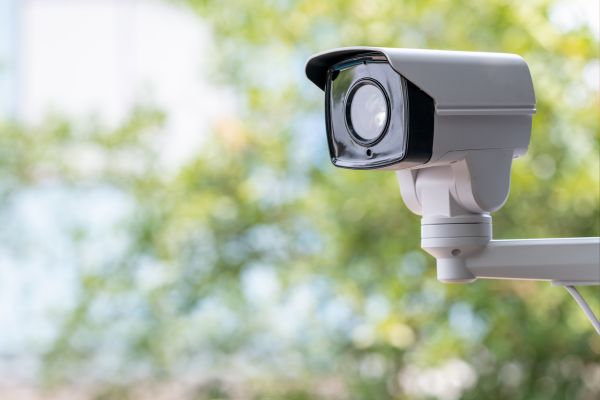
The answer depends on the camera, lighting, lens, placement, and the level of detail you need.
Some night vision security cameras may provide useful visibility at 30 to 50 feet. Others, especially commercial-grade cameras designed for larger properties, may detect activity from 100 feet, 200 feet, or farther.
However, there is a big difference between seeing something and identifying it.
A camera may detect a person walking across a lot from far away, but that does not mean it can clearly identify the person. For commercial security, there are three common levels of visibility:
Detection: The camera shows that a person, vehicle, or object is present.
Recognition: The camera shows general details, such as clothing color, vehicle type, or direction of movement.
Identification: The camera captures enough detail to help identify a person, vehicle, license plate, or specific feature.
For most businesses, identification is the goal in high-risk areas such as entrances, gates, parking lots, loading docks, and outdoor storage areas.
Why nighttime visibility matters for Kansas City businesses
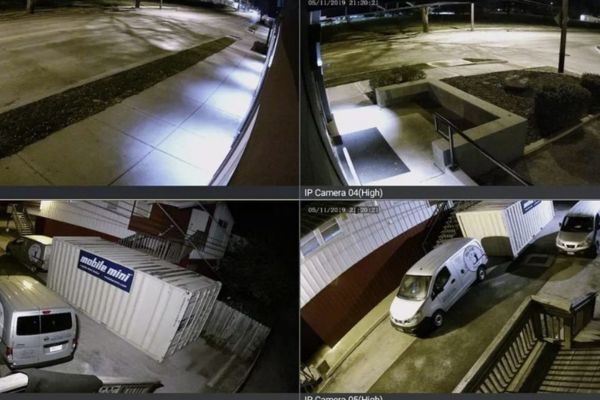
Commercial crime often follows predictable patterns. It is tied to timing, location, access, and visibility. Properties that are dark, quiet, and easy to approach after hours may become easier targets.
Kansas City businesses may face higher risk around:
- Parking lots
- Rear entrances
- Loading docks
- Construction sites
- Outdoor equipment yards
- Warehouses
- Industrial facilities
- Retail centers
- Office buildings
- Multi-tenant properties
That is why video surveillance systems should be designed around how a property actually works after dark.
Business owners can also review local crime and safety information through external public resources such as the Kansas City Police Department crime mapping page and the FBI Crime Data Explorer. These resources can help property owners better understand crime trends and why visibility matters.
What affects how far cameras can see at night?
Nighttime camera performance depends on several factors working together. A strong camera is helpful, but the full system design matters just as much.
Lighting around the property
Lighting is one of the biggest factors in nighttime camera visibility.
Parking lot lights, building-mounted lights, entry lighting, and motion-activated lighting can help cameras capture clearer images. Poor lighting can make footage grainy, dark, or difficult to use.
Still, more light is not always better. Lights placed in the wrong position can create glare, harsh shadows, or washed-out footage. For example, a camera pointed toward headlights or a bright floodlight may struggle to capture detail.
A professional security camera installation in Kansas City should look at where light exists, where shadows fall, and where people or vehicles are most likely to move.
For lighting standards and workplace safety considerations, businesses can also review guidance from the Occupational Safety and Health Administration.
Infrared night vision
Many commercial security cameras use infrared technology to see in low-light or dark conditions. Infrared light is not visible to the human eye, but the camera sensor can use it to capture images.
Infrared security cameras can be useful for:
- Parking lots
- Building perimeters
- Warehouses
- Storage yards
- Construction sites
- Loading areas
- Gated entrances
The infrared range depends on the camera model and installation environment. A small indoor camera may only need short-range night vision. A large commercial site may need stronger infrared capability or additional lighting support.
Rain, fog, snow, dust, insects, reflective surfaces, and dirty lenses can all reduce performance. That is why camera selection and regular maintenance matter.
Lens type and field of view
The lens determines how much area the camera can see and how much detail it can capture at a distance.
A wide-angle camera can cover a large area, but objects farther away may appear smaller. A narrower lens can capture more detail at longer distances, but it covers less area.
This matters for commercial surveillance systems. A wide camera may show movement in a parking lot, while a properly selected camera at an entrance may capture a face or license plate.
For larger properties, ATI Security may recommend a layered approach using different cameras for different jobs. One camera may provide a wide overview, while another camera captures high-detail footage at a gate, doorway, driveway, or loading dock.
Camera resolution
Resolution affects image detail. Higher-resolution cameras can often provide clearer footage, especially when reviewing recorded video.
However, resolution alone does not solve every problem. A high-resolution camera can still perform poorly if it is installed in the wrong location, aimed at glare, or placed too far from the target area.
The best results come from balancing:
- Resolution
- Lighting
- Lens type
- Camera angle
- Mounting height
- Recording quality
- Storage settings
ATI Security designs commercial security systems in Kansas City around the full environment, not just the camera specifications.
Camera placement and mounting height
Camera placement can make or break a surveillance system.
A camera mounted too high may provide a broad view but miss important details. A camera mounted too low may be easier to tamper with. A camera aimed too wide may fail to capture clear evidence.
For Kansas City businesses, important camera locations often include:
- Main entrances
- Employee entrances
- Parking lots
- Loading docks
- Delivery areas
- Rear doors
- Outdoor storage areas
- Dumpster areas
- Gates and access roads
- Reception areas
- Cash handling areas
Good placement creates layers of visibility. One camera can show the overall scene, while another captures close-up detail where people or vehicles must pass.
Weather and outdoor conditions
Kansas City weather can affect camera visibility at night. Rain, snow, fog, humidity, dust, and temperature changes may reduce clarity, especially across longer distances.
Outdoor cameras should be selected for the environment where they will be installed. This includes weather-rated equipment, secure mounting, protected cabling, and proper placement.
Construction sites and industrial properties often need extra planning because conditions change over time. Equipment moves, fencing changes, materials shift, and lighting may not stay consistent. In those situations, mobile surveillance systems can help provide flexible coverage where permanent cameras may not be practical.
Recording quality and storage settings
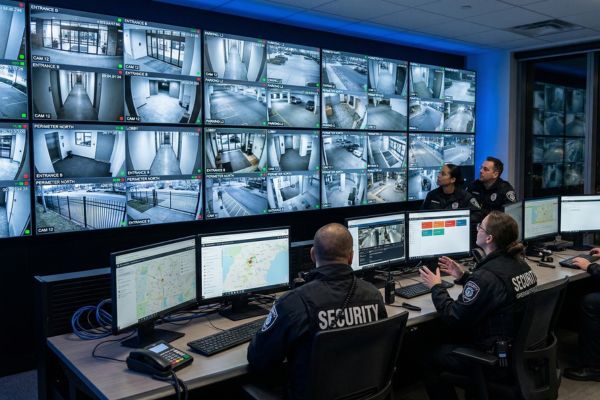
A camera may look clear during live viewing, but recorded footage can look different if the system is not configured properly.
Recording settings that affect quality include:
- Frame rate
- Compression
- Storage capacity
- Cloud recording settings
- Retention period
- Network performance
For businesses that need reliable evidence after an incident, these details matter. Cloud-based security systems and managed video options can help businesses access footage more easily and maintain better control over video storage.
Why distance is not the only question to ask
“How far can the camera see?” is important, but it is not the only question.
A better question is: “What do we need the camera to capture, and where does that need to happen?”
For example, a warehouse may need cameras at dock doors, employee entrances, inventory areas, and truck lanes. A construction site may need coverage around fencing, equipment, materials, and after-hours access points. An office building may need clear views of entrances, parking areas, lobbies, and restricted access points.
Each site has different risks. That is why ATI Security does not rely on one-size-fits-all systems. We design integrated security systems based on the way your business operates.
How commercial crime follows predictable patterns
Most commercial crime is not completely random. It often follows patterns connected to opportunity.
A site may be more vulnerable when:
- Lighting is poor
- Cameras are outdated
- Parking lots have blind spots
- Doors or gates are not monitored
- Outdoor assets are visible
- Staff schedules are predictable
- Footage is hard to review
- There is no active monitoring after hours
Criminals often look for places where they can approach, enter, and leave without being clearly seen. Strong Kansas City video surveillance can reduce that opportunity.
For added protection, cameras can also work with access control systems, intrusion detection systems, and remote video monitoring.
Night vision cameras and remote video monitoring
Night vision cameras help record activity after dark. Remote video monitoring can take protection a step further by helping businesses respond to suspicious activity sooner.
With remote and video monitoring, trained monitoring teams can review live activity, verify threats, and follow an agreed response plan. This can be especially useful for:
- Construction sites
- Equipment yards
- Logistics facilities
- Parking lots
- Industrial properties
- Vacant buildings
- Multi-location businesses
Instead of only recording a break-in, remote monitoring may help detect suspicious activity before a loss occurs.
Where cameras should be strongest at night
Not every part of a property needs the same type of camera. Some areas need general awareness. Others need high-detail identification.
For Kansas City businesses, the strongest nighttime camera coverage is often needed at:
- Vehicle entrances and exits
- Pedestrian entrances
- Parking lot drive lanes
- Loading docks
- Back doors
- Gates
- Outdoor storage areas
- Fleet parking areas
- Construction site perimeters
- Dumpster areas
- Rear alleys
These are the areas where better visibility can make a real difference.
How ATI Security designs better nighttime surveillance
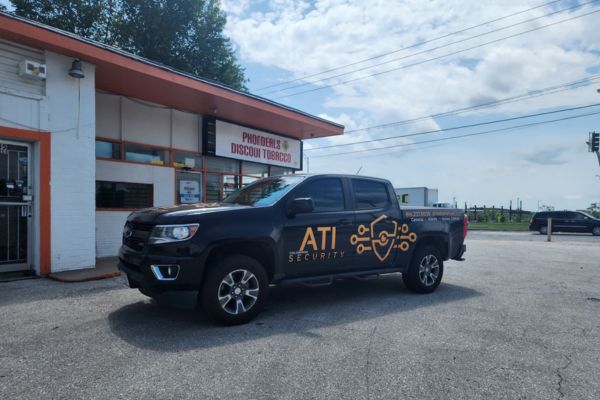
ATI Security is a locally owned and operated Kansas City security partner built on experience, integrity, and results.
We take time to understand your facility, risks, schedule, traffic patterns, and operational needs before recommending a solution. The goal is not just to install cameras. The goal is to design a commercial security system that works in the real world.
ATI Security provides:
- Access control systems
- Video surveillance systems
- Intrusion detection systems
- Mobile surveillance systems
- Cloud-based security systems
- Remote and video monitoring
- Visitor management systems
- Managed video services
- Integrated security systems
From small businesses to large commercial facilities, ATI Security helps Kansas City organizations build scalable, dependable, and practical protection.
Questions to ask before choosing night vision cameras
Before investing in night vision security cameras, ask these questions:
- Which areas are most vulnerable after dark?
- Do we need to detect, recognize, or identify activity?
- Are parking lots and entrances properly lit?
- Do we need license plate visibility?
- Are there blind spots around the building?
- Can employees access footage quickly?
- Do we need remote monitoring after hours?
- Will the system scale as the business grows?
- Are cameras integrated with access control or alarms?
- Is the system designed for Kansas City weather?
These questions help determine the right camera type, lens, placement, lighting, storage, and monitoring strategy.
So, how far can cameras see at night?
Commercial security cameras may see anywhere from a short indoor distance to several hundred feet outdoors, depending on the system design. But the better answer is this:
Your cameras should see clearly enough in the right locations to support your security goals.
For some Kansas City businesses, that means clear footage at the front entrance. For others, it means visibility across a parking lot, loading dock, storage yard, or job site gate.
A well-designed system does more than record video. It helps deter crime, improve response, support investigations, and protect your business around the clock.
Key takeaway
Nighttime camera performance depends on lighting, infrared range, lens selection, resolution, camera placement, weather, recording settings, and monitoring strategy.
ATI Security delivers business security systems in Kansas City that combine video surveillance, access control, intrusion detection, mobile surveillance, cloud-based platforms, remote monitoring, and integrated security solutions.
Request a quote from ATI Security
Need better nighttime visibility for your Kansas City business, property, job site, or facility?
Contact ATI Security today to request a quote for a custom commercial security system designed around your site, your risks, and your operational needs.