Before you sign with a security integrator in Lee’s Summit, confirm three things: that the company holds proper Missouri licensing and liability insurance, that it will put service-level response times in writing, and that the system it proposes is non-proprietary enough that you are not locked into one vendor forever. Those three answers separate a dependable long-term partner from a crew that disappears after installation. Everything else in the contract flows from there.
Key takeaways
- Verify licensing and insurance first. Ask for proof of liability coverage and any required Missouri electrical or alarm credentials before any deposit changes hands.
- Get response times in writing. A real SLA names hours, not vague promises, and specifies who answers the phone at 2 a.m.
- Avoid proprietary lock-in. Open-standard hardware and exportable footage keep you in control if the relationship ends.
- Match the design to Lee’s Summit conditions. Summit humidity, winter ice, and mixed retail-and-warehouse building stock all change the spec.
- Insist on local service. A technician who can reach your site on I-470 within the hour is worth more than a national call center.
Start with licensing, insurance, and references
The first questions are the least glamorous and the most important. Ask the integrator to show current general liability insurance and workers’ compensation coverage, and ask whether the low-voltage and electrical work on your project requires a licensed electrician under local code. Alarm and security licensing in Missouri is handled at the municipal level rather than through a single statewide contractor license, so requirements in Lee’s Summit, Independence, and Kansas City proper are not identical. Do not take a salesperson’s word that “we’re covered.” Confirm it with a licensed professional and your own city’s business-licensing office before you sign.
Then ask for three references from businesses of your size and type in eastern Jackson County. A company that installs cameras for warehouses along the I-470 corridor may have little experience with a Summit Fair retail storefront or a medical office near Lee’s Summit Medical Center. References should be recent, local, and reachable by phone.
Pin down the service agreement and response times

An alarm that no one answers is decoration. The single most revealing question you can ask is: “When a camera goes dark or a door controller faults, how fast will someone be on my site, and is that time in the contract?” A serious integrator commits to a service-level agreement that names business-hour and after-hours response windows, spells out whether monitoring is handled locally or routed to a third party, and lists what is covered under warranty versus billable. Get it in writing.
Ask specifically about redundancy. Kansas City summer storms and the occasional ice event take down power and internet across the metro, so you want to know how the system behaves during an outage and how footage is retained until service returns. The U.S. Federal Emergency Management Agency publishes practical business continuity planning guidance that is worth reviewing before you decide how much redundancy your operation actually needs.
Ask whether the system locks you in
Proprietary systems are the most expensive mistake buyers make. If the cameras, recorders, and access-control panels only talk to one brand’s software, and only your current integrator can service them, you have handed away your leverage. Ask directly: “If I end this contract in three years, can another company take over this hardware, and can I export my footage in a standard format?”
Favor integrators who build on open or widely supported standards and who will hand you administrator credentials to your own system. Ownership of your recordings, your user accounts, and your configuration should never be in question. This matters more as businesses move to cloud-based security systems, where the line between “your data” and “the vendor’s platform” can blur if you do not nail it down in the contract.
Make them design for Lee’s Summit conditions
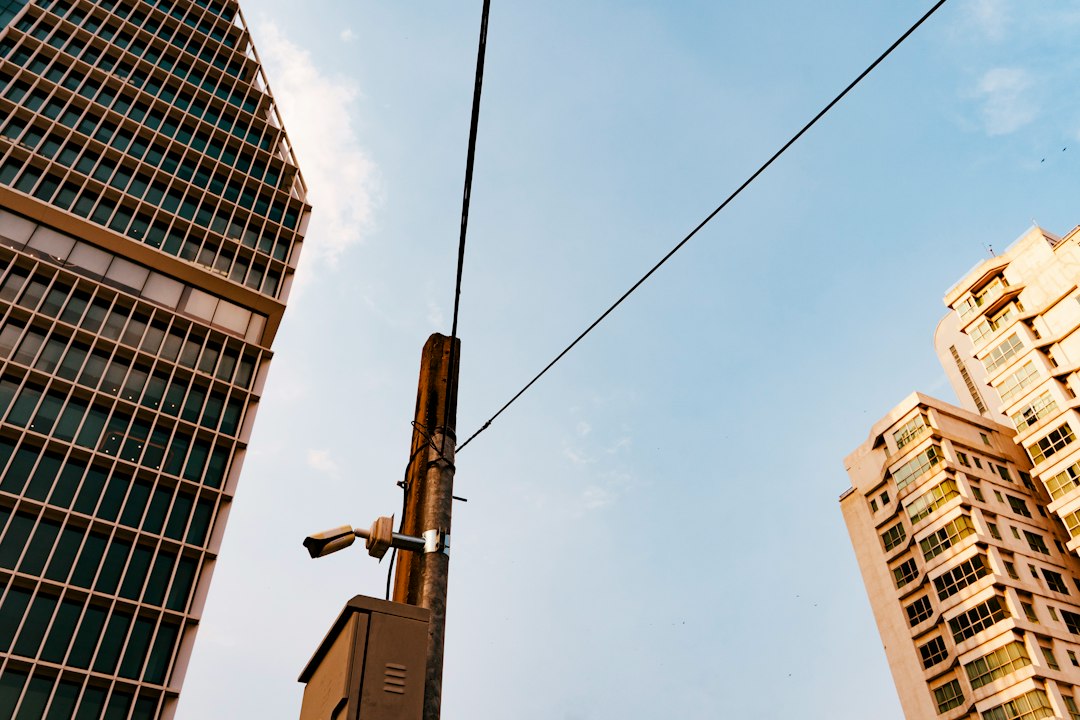
A quote that could have been written for Phoenix or Seattle is a red flag. Lee’s Summit sits in a humid continental climate with hot, muggy summers and freeze-thaw winters, and that affects real hardware choices. Outdoor cameras need enclosures rated for both summer heat and winter ice, and dome housings on east- and west-facing walls fight low-angle glare at sunrise and sunset. A 2023 report from the Insurance Information Institute notes that commercial property and theft claims remain a significant cost pressure for small businesses, which is exactly why camera placement at loading docks and rear entrances, common weak points in Lee’s Summit’s mix of strip retail and light-industrial buildings, deserves specific attention rather than a generic grid.
Ask the integrator to walk your actual site and explain placement choices in plain language. For a deeper look at sizing a system correctly, the client’s own guide on how many cameras a Kansas City business needs is a useful starting point before the walkthrough.
Compare quotes on substance, not sticker price

The lowest bid often leaves out the expensive parts: proper cabling, surge protection, adequate recording storage, and labor for a clean install. When you compare proposals, line them up item by item and ask each vendor to justify differences. A quote that bundles access control systems with video and intrusion detection under one accountable integrator is usually easier to service than three separate contracts that point fingers at each other when something fails.
Finally, ask who actually does the work. Some companies subcontract installation to crews they have never met. You want employees who are trained on the equipment, local to the metro, and able to return for service without a dispatch fee from two states away. If you want to talk through a specific site, you can reach the team directly to arrange a walkthrough.
The bottom line
Choosing a security integrator in Missouri comes down to accountability. Confirm the licensing and insurance, get response times in writing, refuse proprietary lock-in, and make the vendor prove the design fits Lee’s Summit buildings and weather. Ask those questions before you sign, and the contract will protect you instead of the other way around.